Advertisement
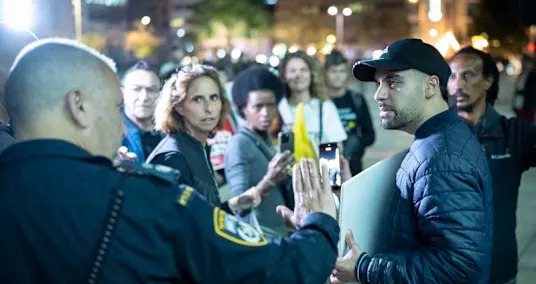
Protests took place in Tel Aviv, Jerusalem, Haifa, and Beersheba, as a survey found broad but uneven support among Jewish Israelis for Operation Roaring Lion.
Israel Police arrested 21 anti-war protesters Saturday night as demonstrations against the conflict with Iran expanded in multiple cities despite restrictions on public gatherings.
Protests took place in Tel Aviv, Jerusalem, Haifa, and Beersheba, with hundreds of participants reported in Tel Aviv and Jerusalem and about 100 in Haifa, marking the largest turnout since weekly demonstrations began. Authorities said 13 people were arrested in Tel Aviv and eight in Haifa.
Police said the gatherings were not approved under Home Front Command regulations that ban events with more than 50 people. Officials said the increase in turnout followed calls by groups opposing the government to protest despite the restrictions.
“During a situation assessment that took place at the scene with a Home Front Command representative… it was clarified that there was a real risk to human life and accordingly, Yarkon [precinct] police commander Tzachi Sharabi ordered the gathering to be dispersed,” police said.
Hadash-Ta’al chairman Ayman Odeh, an Arab lawmaker involved in the protests, criticized the police response, calling officers fascists “in the service of the government” and saying they were afraid of “the heroic citizens who went out, despite everything, to make their voice heard.”

Survey shows broad, uneven support for war
The demonstrations come as a March 2026 survey by the Israel Democracy Institute found broad but uneven support among Jewish Israelis for Operation Roaring Lion. Support was strongest on the Right at 87% and about half on the Left.
The survey also found that Jewish and Arab respondents largely agreed that Iran’s resilience has been stronger than expected. Most Jewish respondents said Israeli society could sustain the campaign for up to one month, while 28% said as long as needed. Arab respondents were less optimistic about how long the public could endure the conflict.
A majority of Jewish respondents said Prime Minister Benjamin Netanyahu’s decision was driven by security considerations, while most Arab respondents viewed it as political.
LATEST POSTS
- 1
 McDonald's is bringing two 'KPop Demon Hunters' meals to McDonald's. Here's what they include and when they launch.
 - 2Step by step instructions to Buy a Jeep Wrangler on a Senior's Spending plan
- 3As infant botulism cases climb to 31, recalled ByHeart baby formula is still on some store shelves
- 4Kiefer Sutherland arrested after allegedly assaulting a ride-share driver in L.A.
- 5This Canadian crater looks like marbled meat | Space photo of the day for Jan. 6, 2026



- Holden Commodore Turbo BT1 Police Interceptor Offered for Sale in Australia
- CDC pauses dozens of types of lab testing during evaluation and in wake of downsizing
- IDF: Staying in West Bank refugee camps will quell lone-wolf terror
- Step by step instructions to Keep up with the Life span of Your Kona SUV's Battery Duration
- Danish warship sunk by famed British admiral discovered after 225 years
- Concern for couple jailed in Tehran as British embassy closes
- Blue Origin’s New Glenn rocket landed its booster on a barge at sea – an achievement that will broaden the commercial spaceflight market
- The Craft of Do-It-Yourself Home Stylistic layout: Change Your Space
- It's been 20 years since MTV's golden couple split. These producers saw it all unravel.